Resonant Forms
10th November - 21st December 2026
Emilie Pugh
Resonant Forms
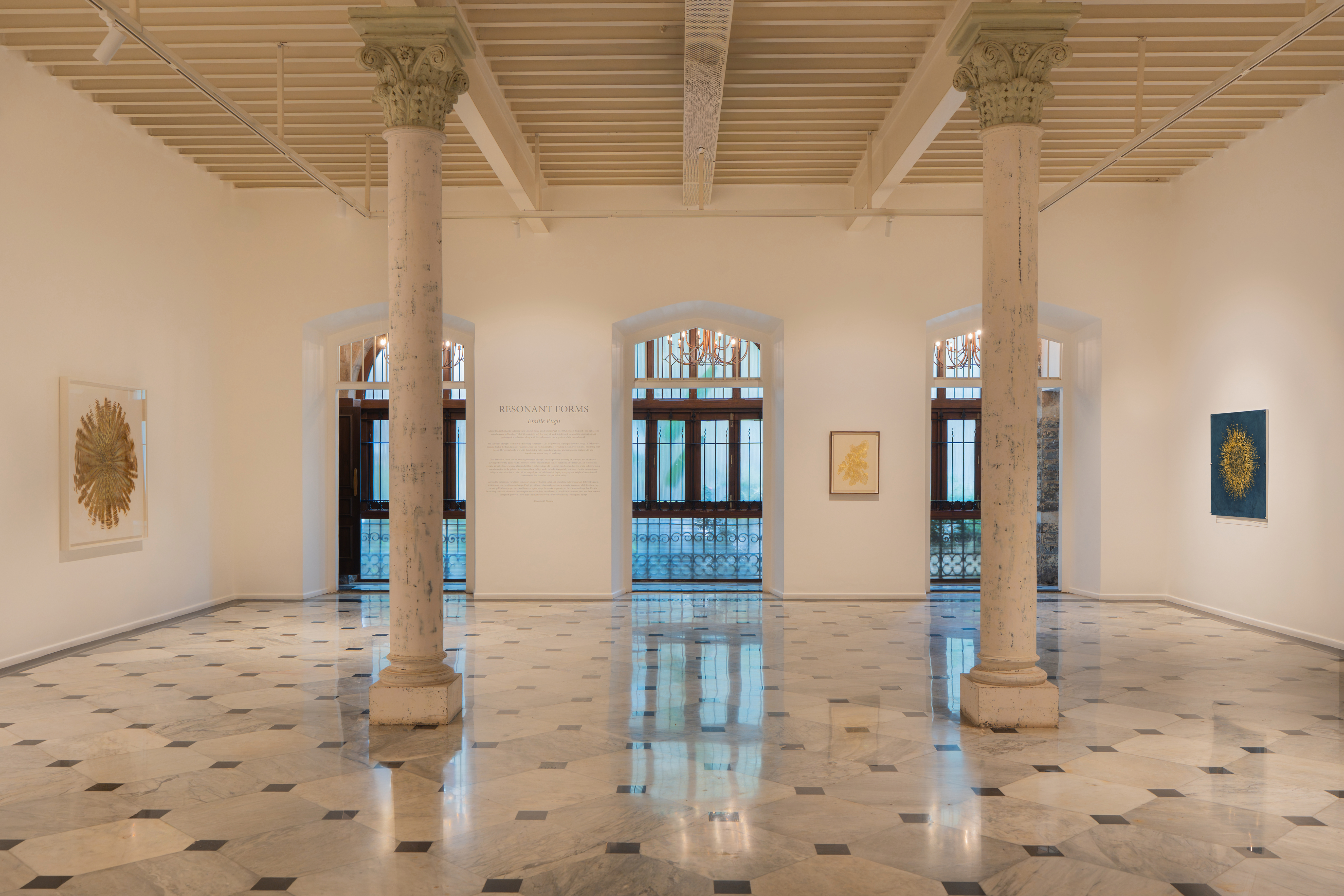
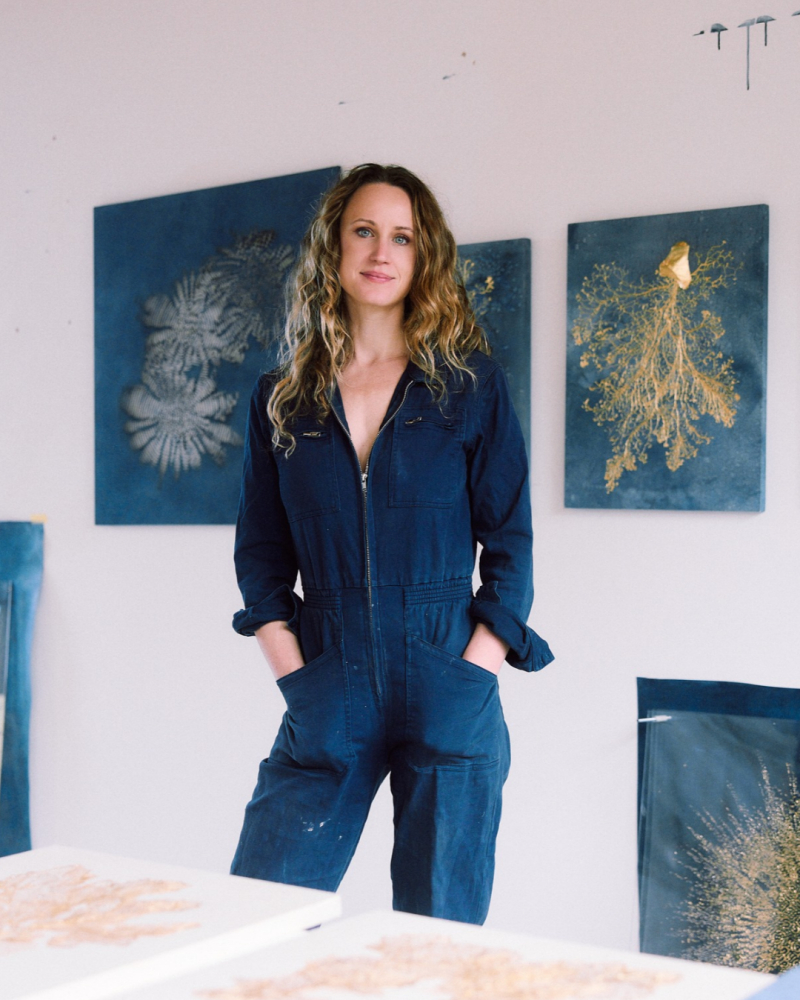
Galerie ISA is thrilled to welcome back London-based artist Emilie Pugh (b. London, England, 1988) for her second solo showcase in Mumbai. Titled ‘Resonant Forms’, this body of work is informed by scientific observation and philosophical reflection, along with layered material investigations of the natural world.
On the walls of Pugh’s studio is the following statement— ‘All life-forms are in fact processes not things.’ It’s this very thought that is the foundation of Pugh’s practice and working method, favouring motion over stillness, becoming over being. Her works hold a world in flux, finding patterns and dimensions and recognizing that growth and transformation are integral to change.
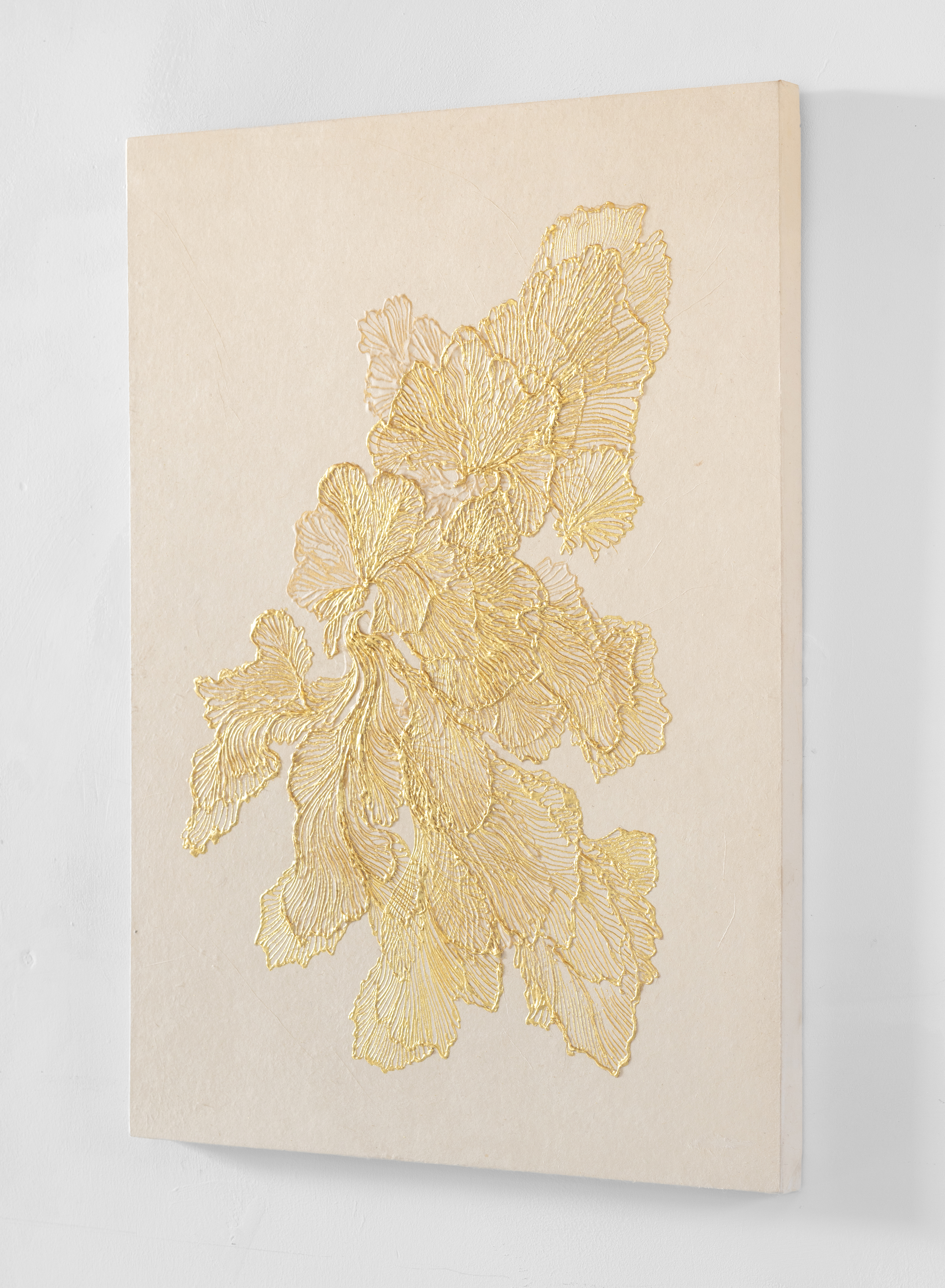
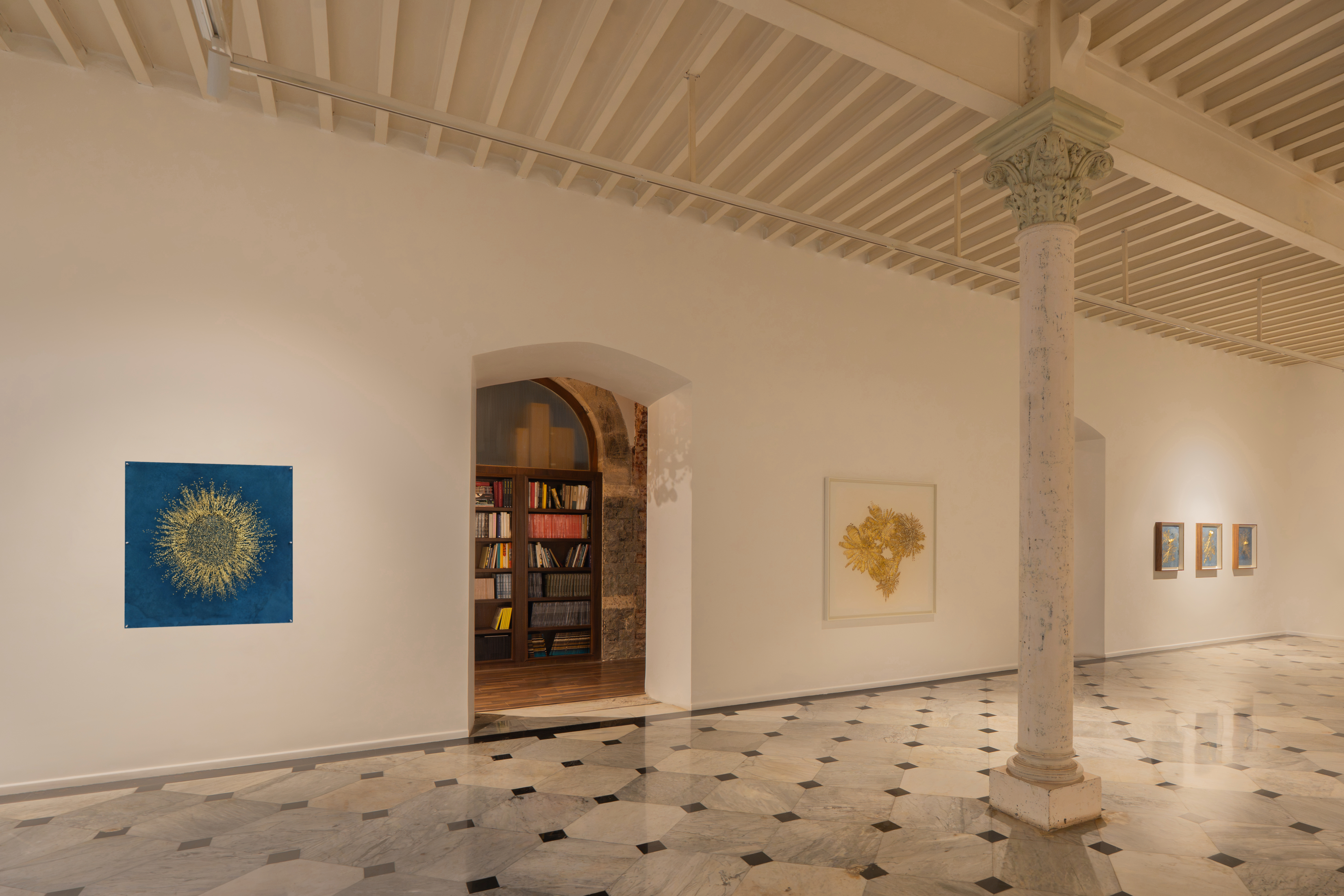
This particular series sees an exciting evolution of Pugh’s unique practice. Drawing on concepts and techniques developed over the past decade, ‘Resonant Forms’ presents them in new iterations. The materials and explorations expand as well: stones, layered glass and gilded relief drawings add transparency, light and depth, while indigo brings a new dimension to the palette. Showcasing these indigo works in India is especially resonant. On the sub-continent, indigo is more than just a color, it’s an integral part of India’s artistic legacy, carrying the weight of centuries-old craftsmanship that dates back to the Indus Valley.
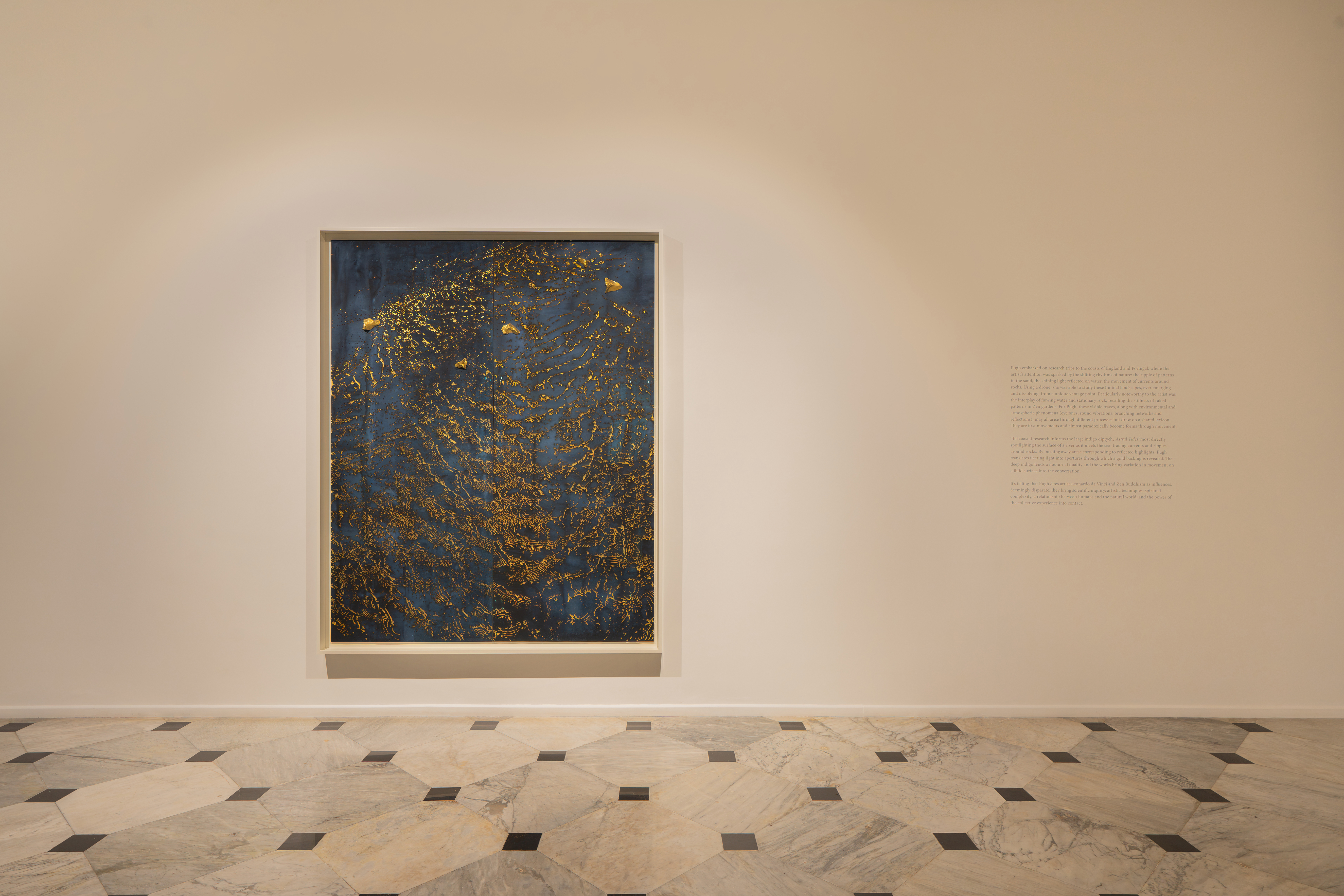
Pugh embarked on research trips to the coasts of England and Portugal, where the artist’s attention was sparked by the shifting rhythms of nature: the ripple of patterns in the sand, the shining light reflected on water, the movement of currents around rocks. Using a drone, she was able to study these liminal landscapes, ever emerging and dissolving, from a unique vantage point. Particularly noteworthy to the artist was the interplay of flowing water and stationary rock, recalling the stillness of raked patterns in Zen gardens. For Pugh, these visible traces, along with environmental and atmospheric phenomena (cyclones, sound vibrations, branching networks and reflections), may all arise through different processes but draw on a shared lexicon. They are first movements and almost paradoxically become forms through movement.
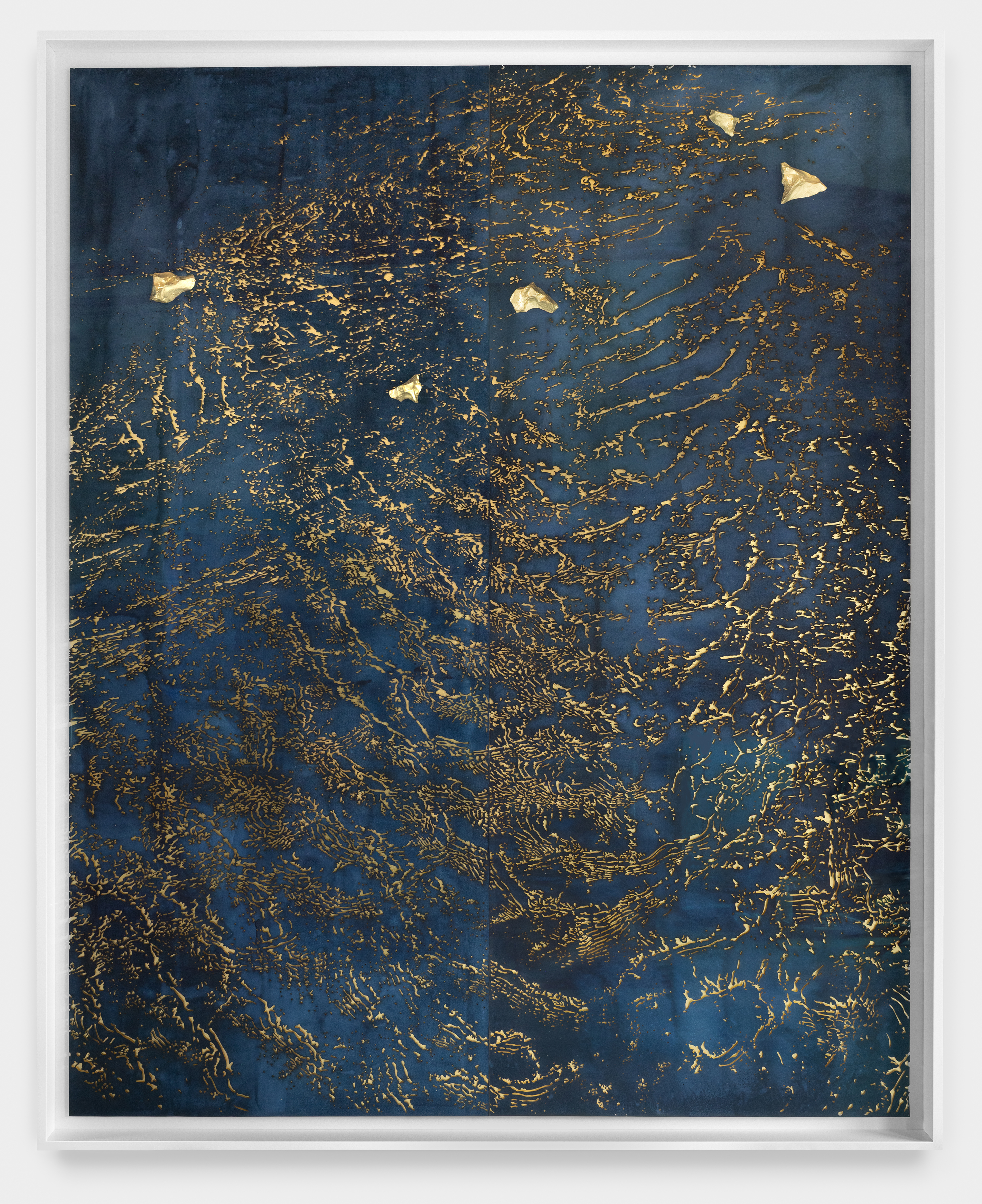
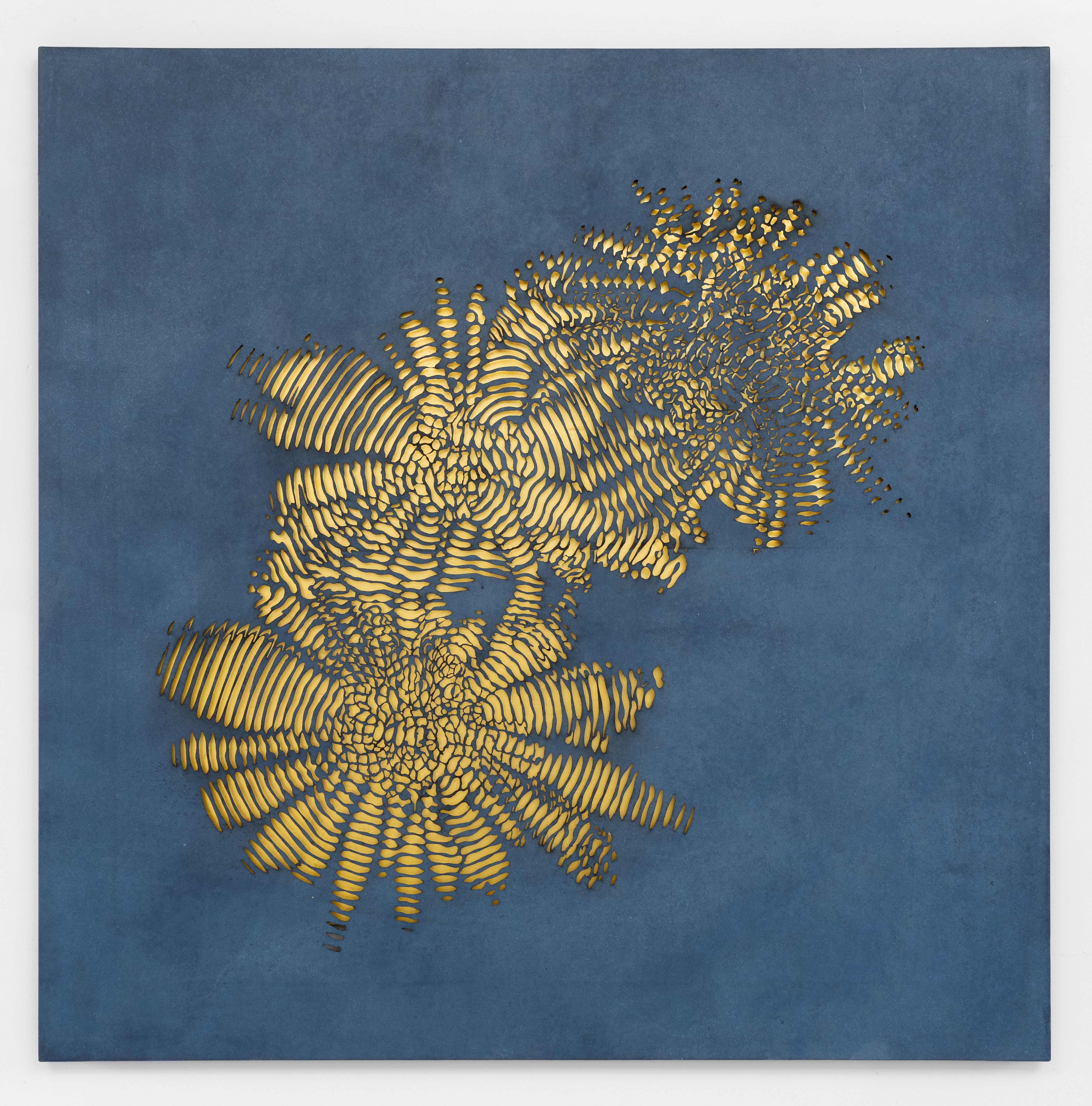
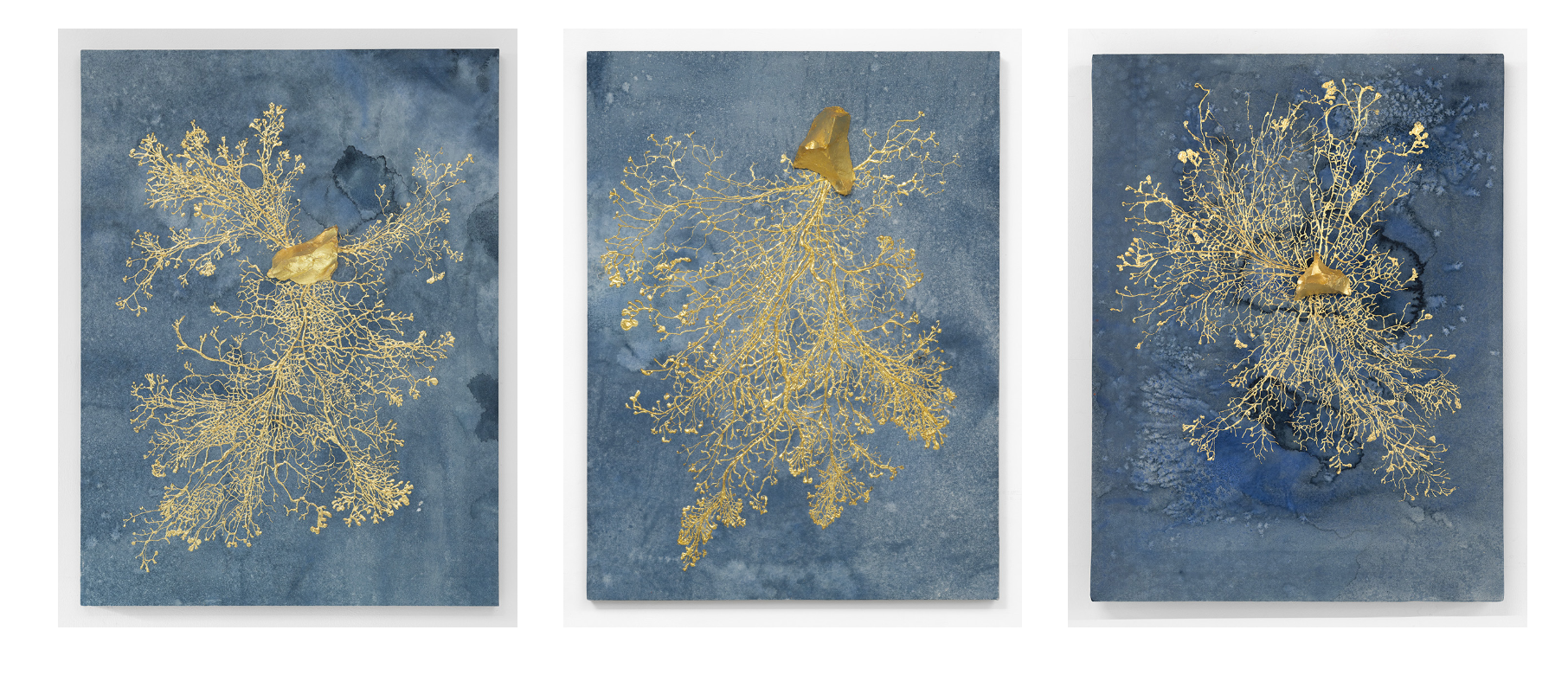
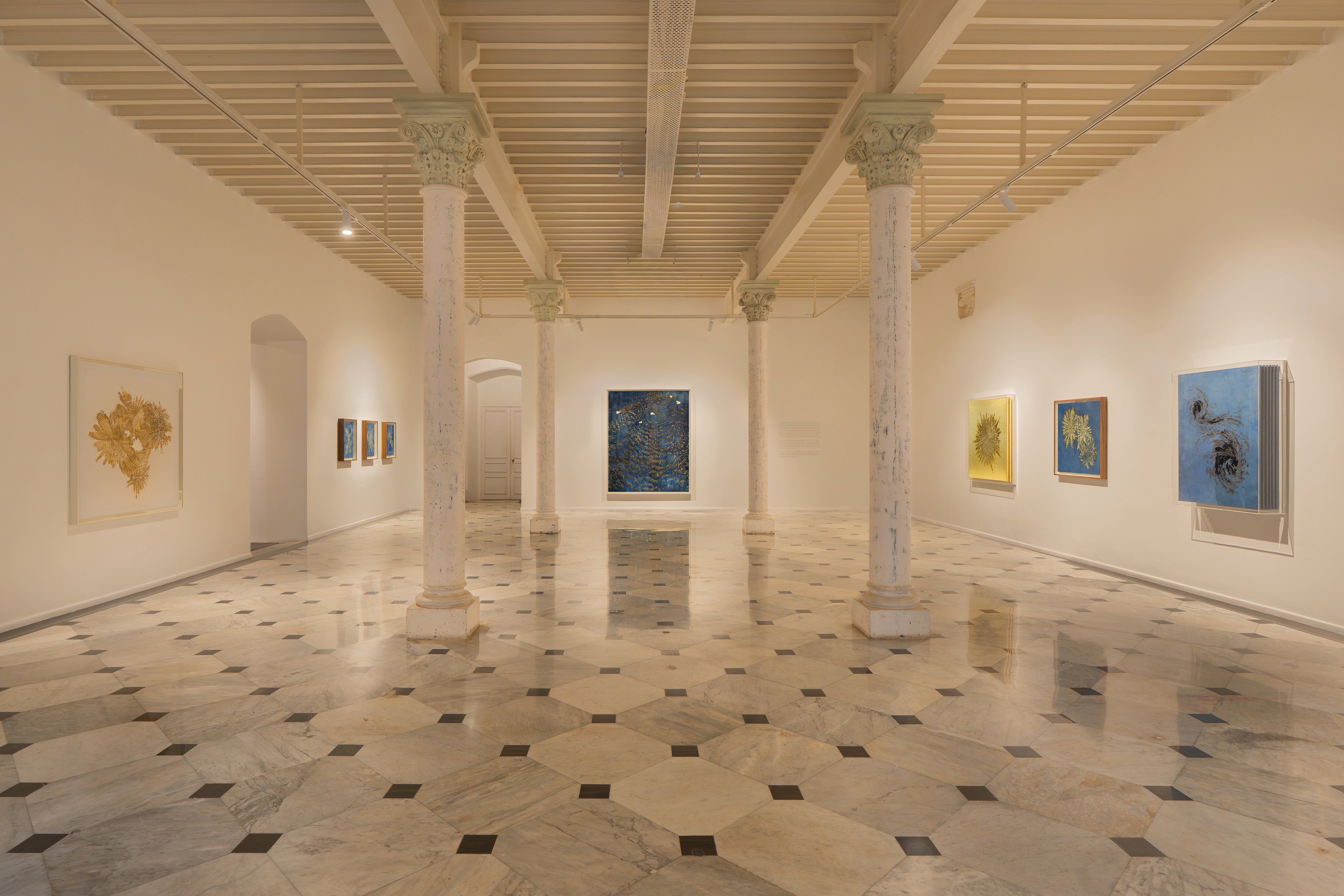
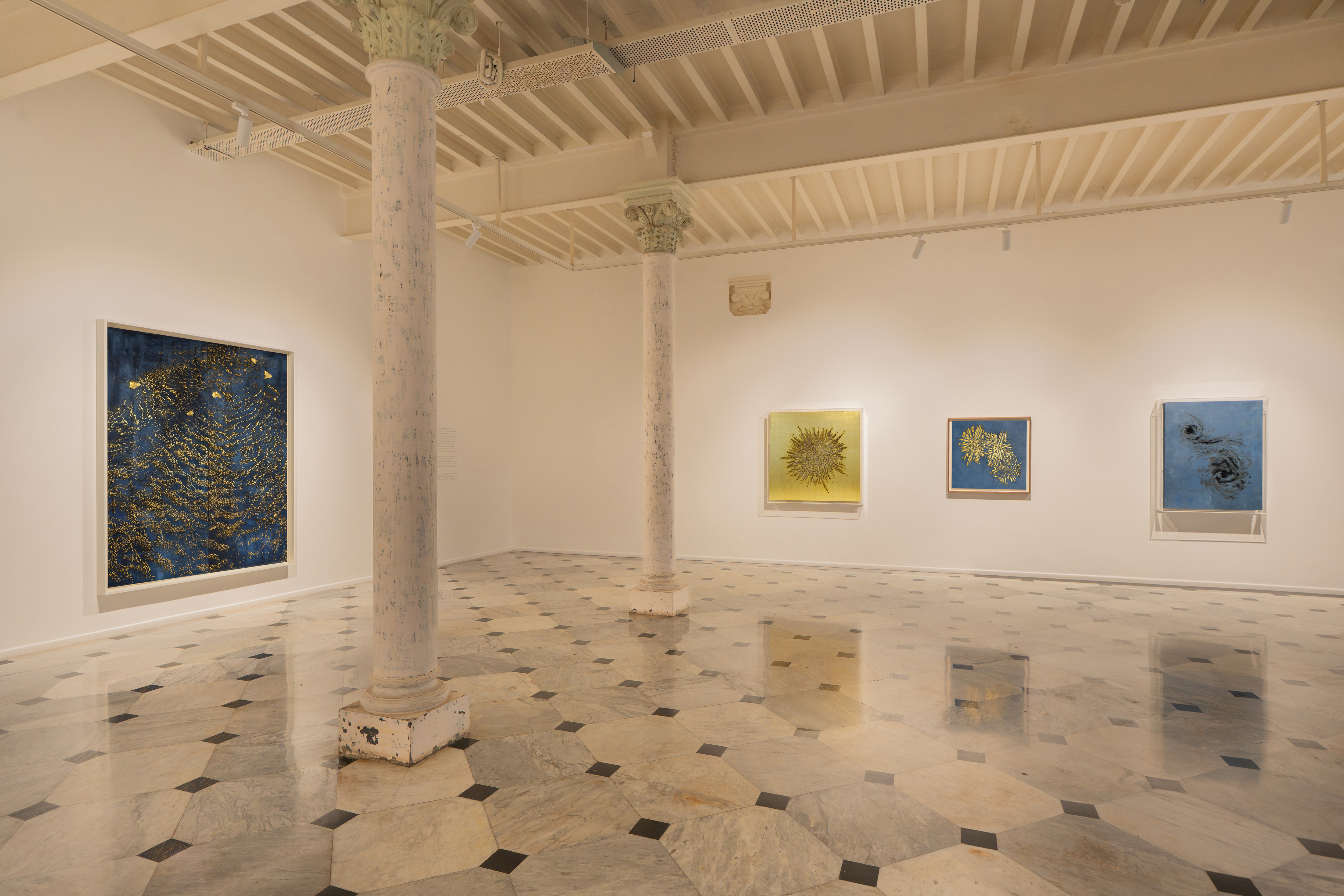
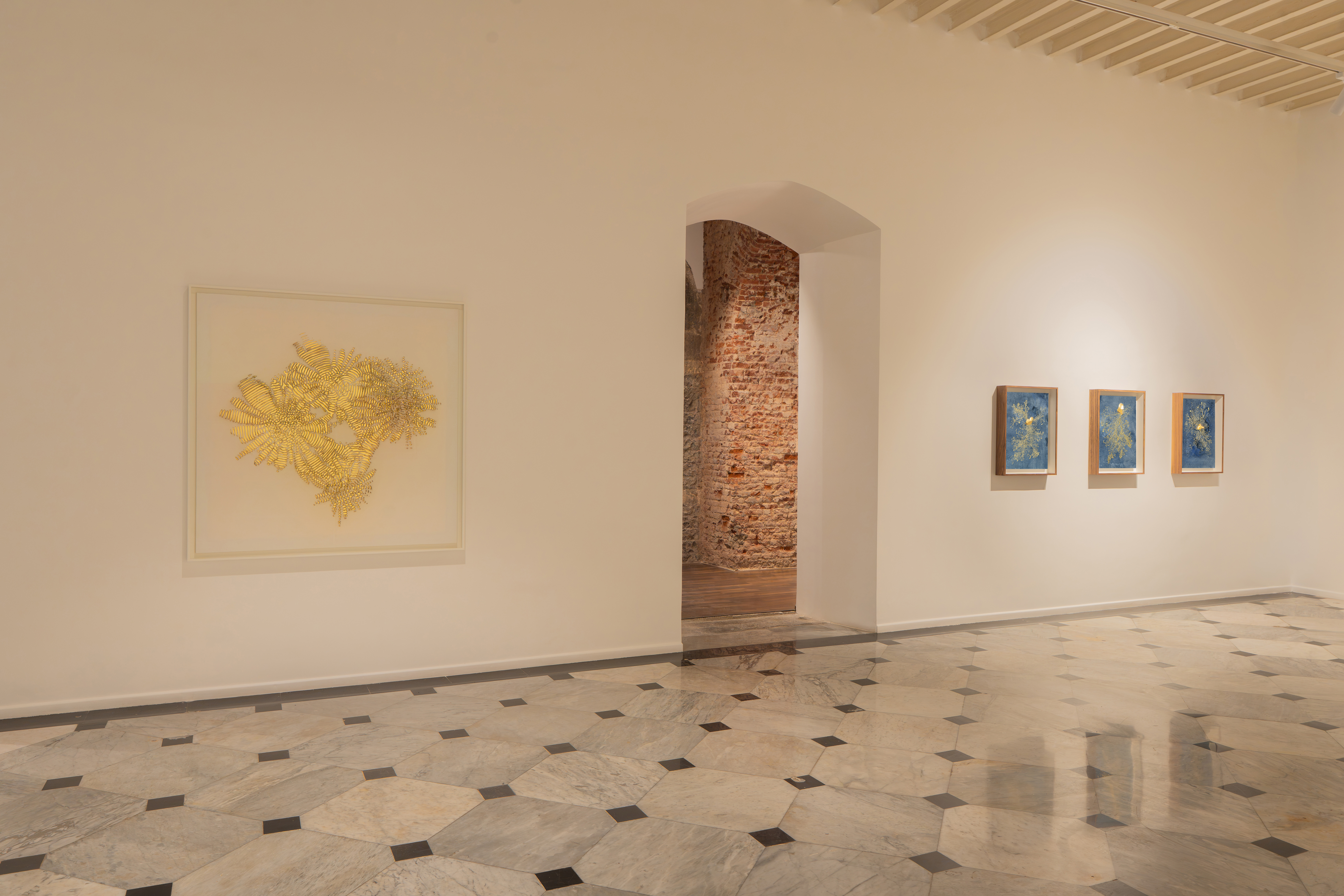
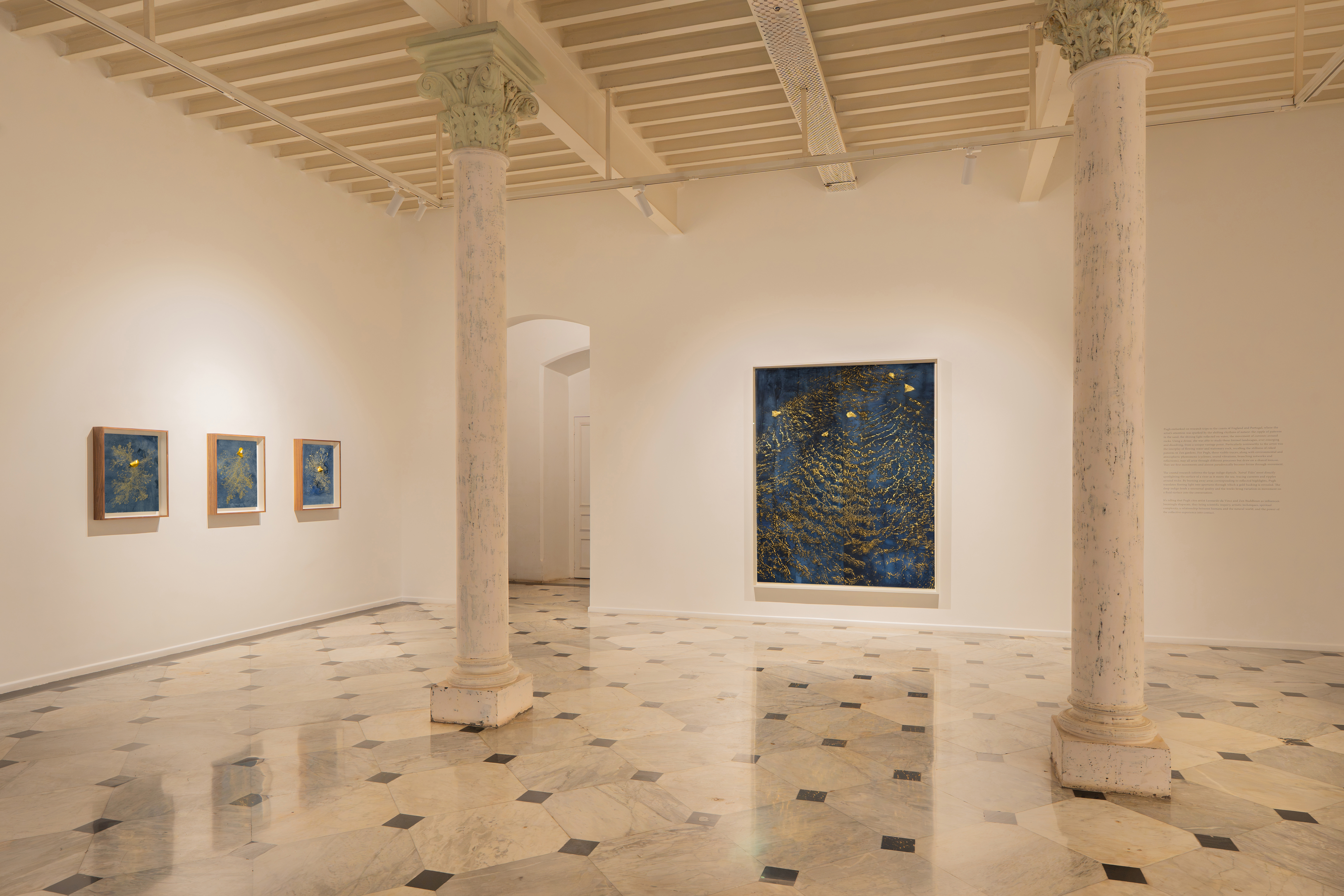
The coastal research informs the indigo diptych, ‘Astral Tides’ most directly spotlighting the surface of a river as it meets the sea, tracing currents and ripples around rocks. By burning away areas corresponding to reflected highlights, Pugh translates fleeting light into apertures through which a gold backing is revealed. The deep indigo lends a nocturnal quality and the works bring variation in movement on a fluid surface into the conversation. In ‘Arborescence I-VI,’ six indigo panels with gilded, cast stones and relief drawings feature forms that are akin to mycelial networks but in fact arise from branching patterns in the sand that Pugh encountered on her visit.
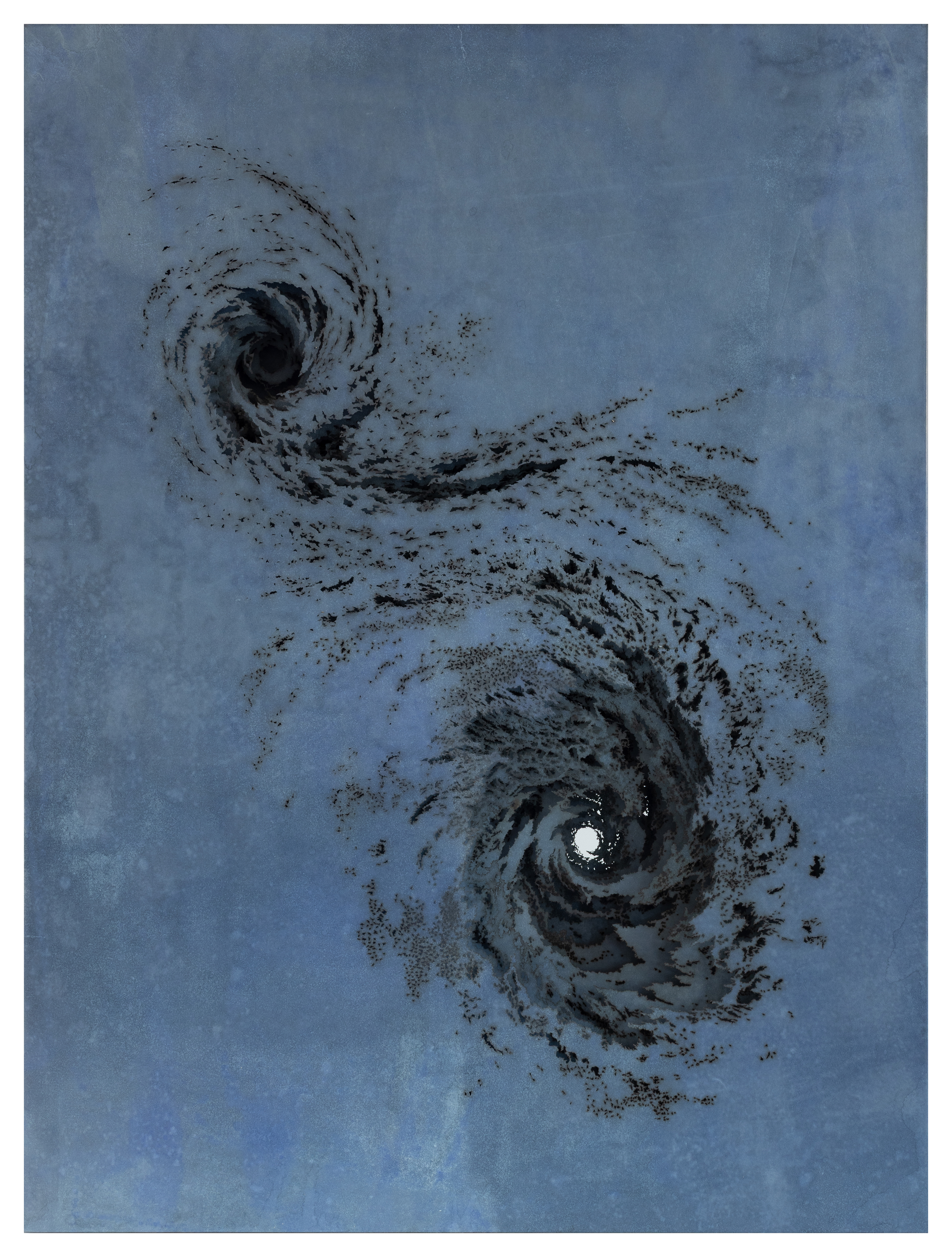
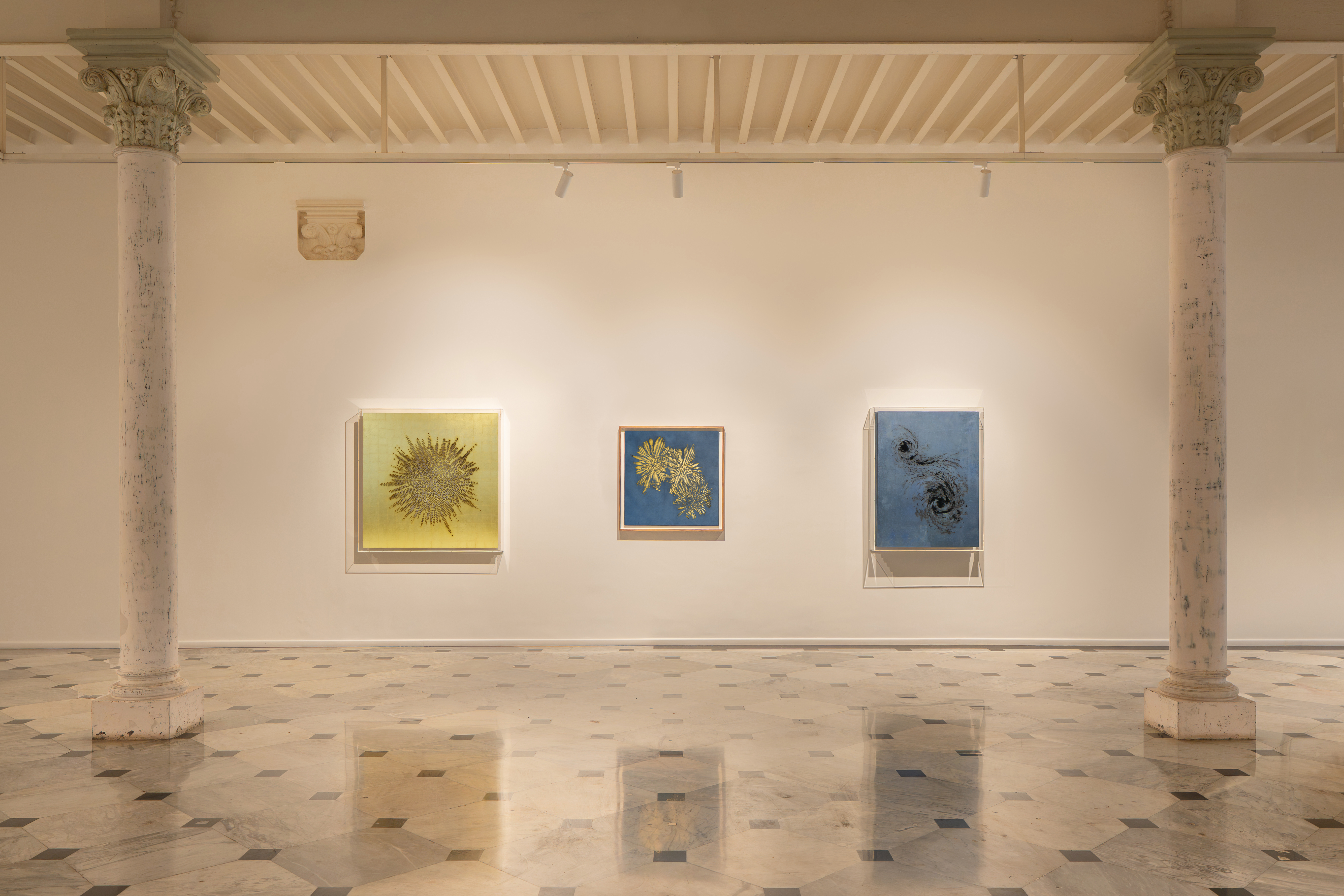
The introduction of indigo in this showcase, signals a poetic move beyond Pugh’s existing palette of white paper, sepia tones and gold. The significance of this dark, inky shade is manifold—it’s strongly associated with great depths, with infinite vastness, and the unknown beneath the surface. It also echoes Pugh’s documentation of wide expanses of water and her curiosity around atmospheric and water-based phenomena, whether in the spiralling nature of whirlpools and cyclonic storms or in the thrum of her cymatic works (patterns produced when water vibrates at a particular sound frequency). The former is seen in ‘Confluence’ and ‘Nocturne’ where the artist distills the raw energy of this force, echoing its power to destroy and renew.
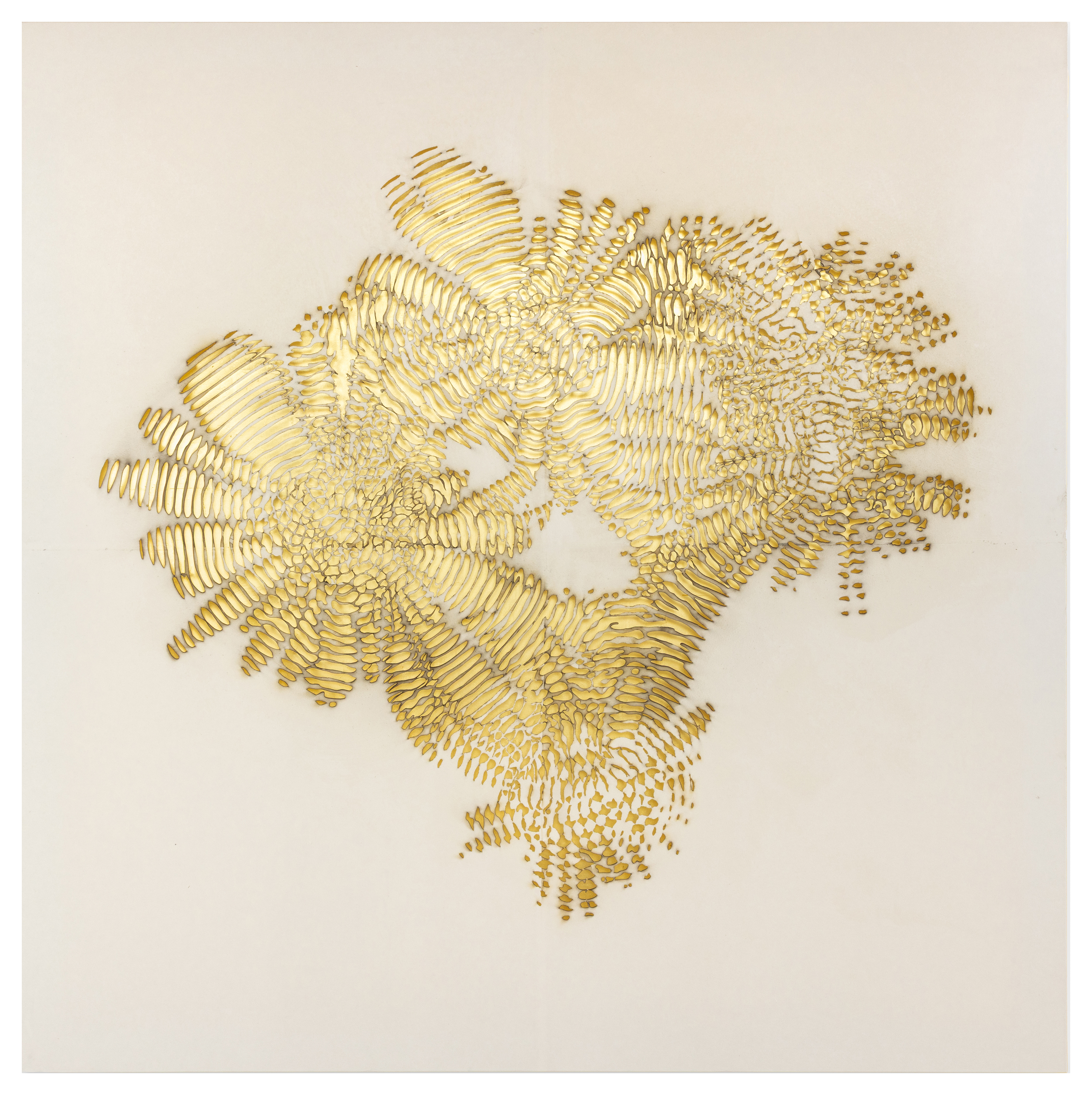
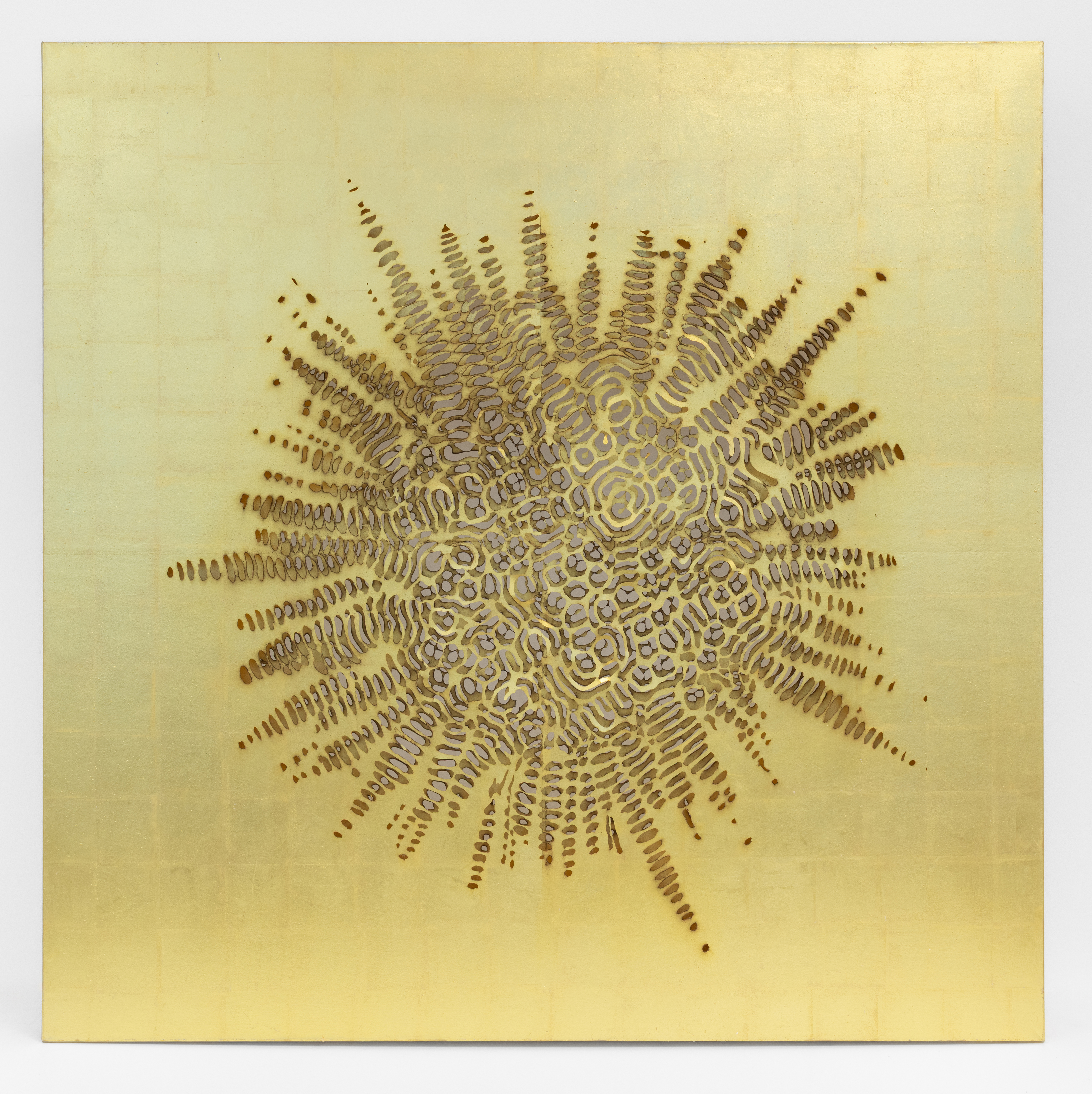
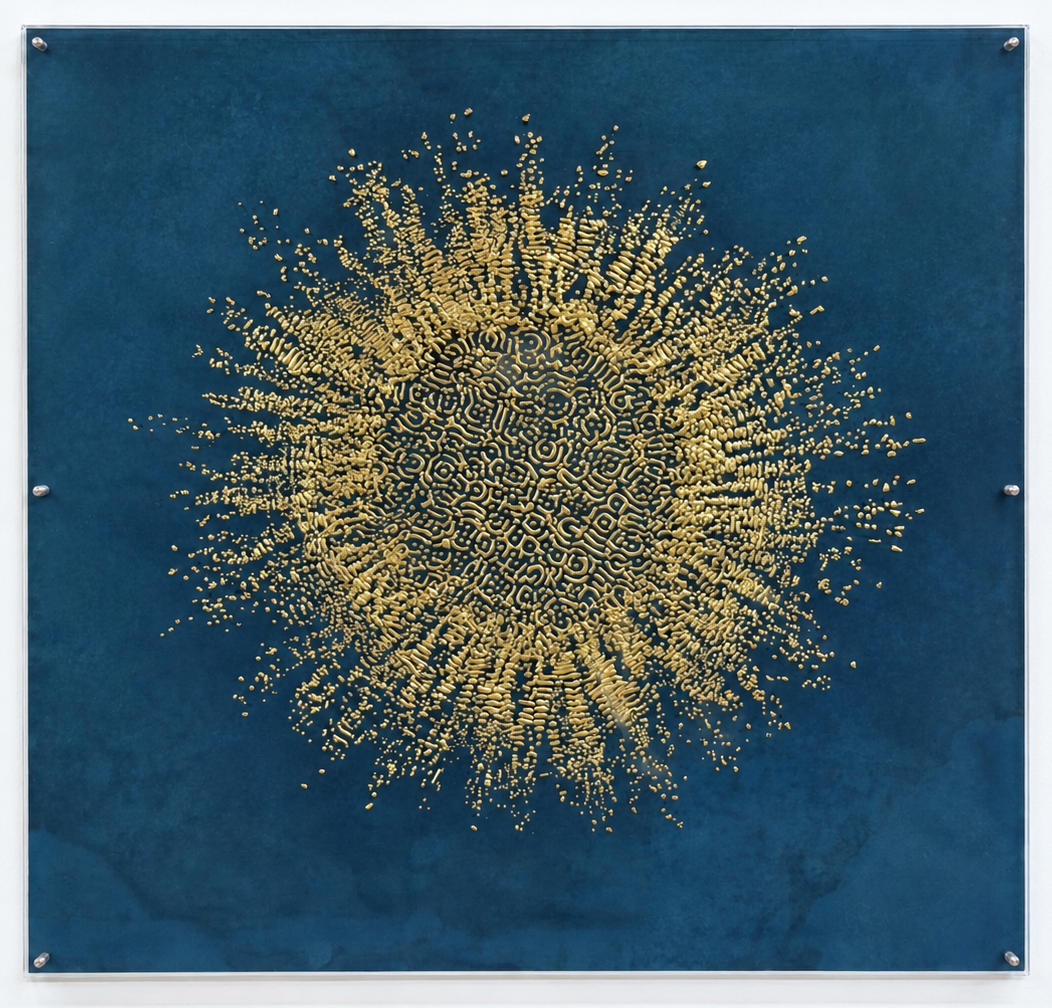
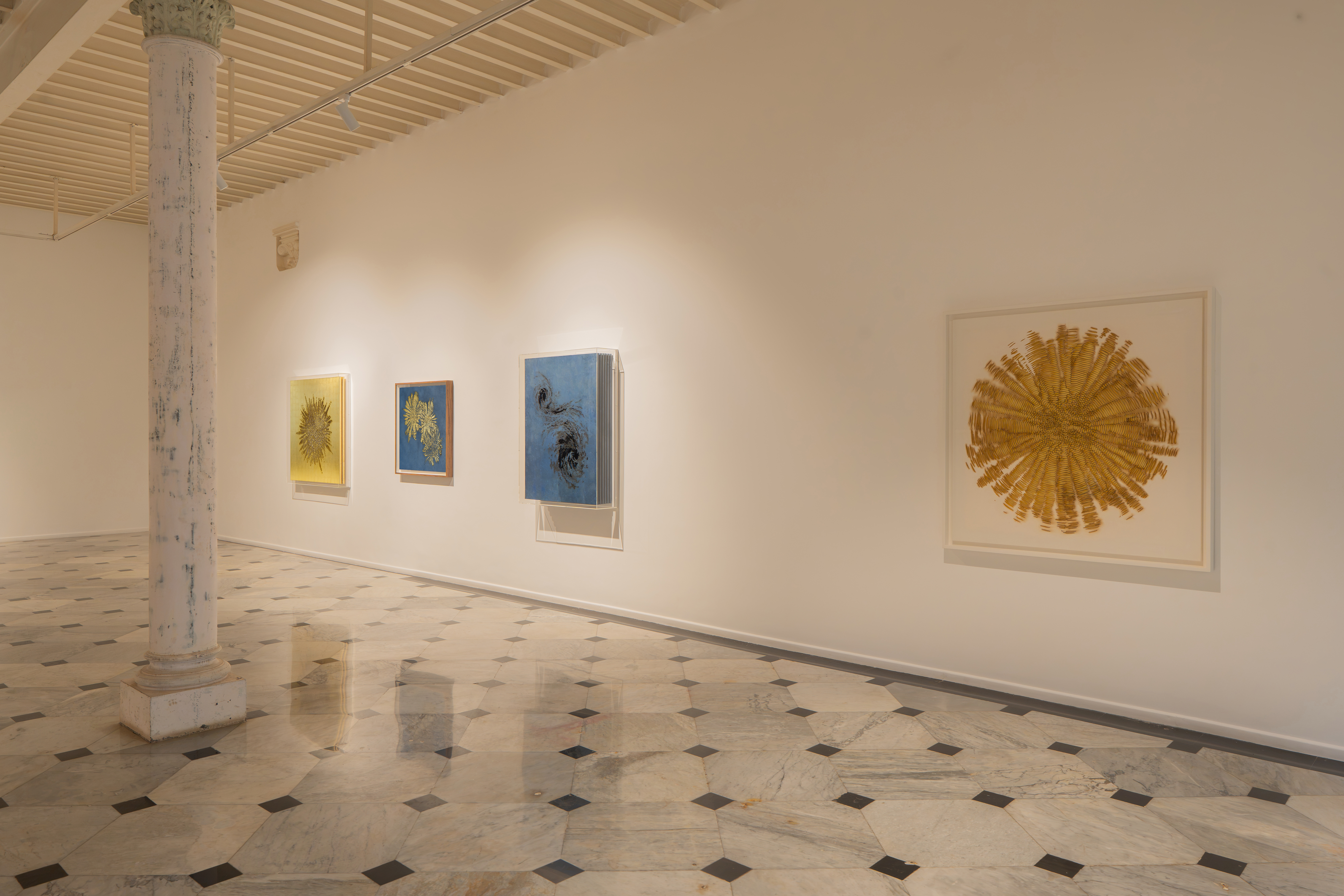
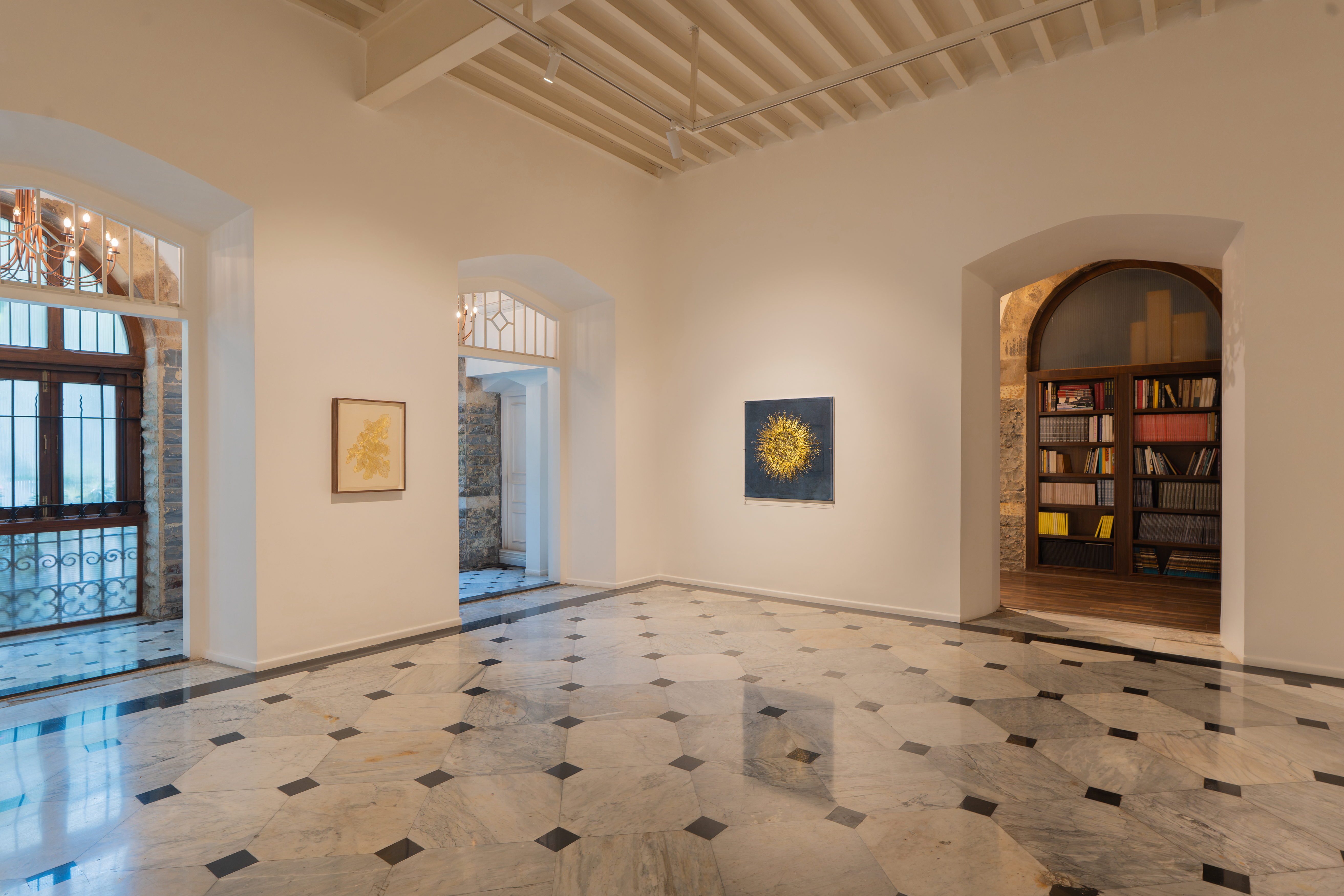
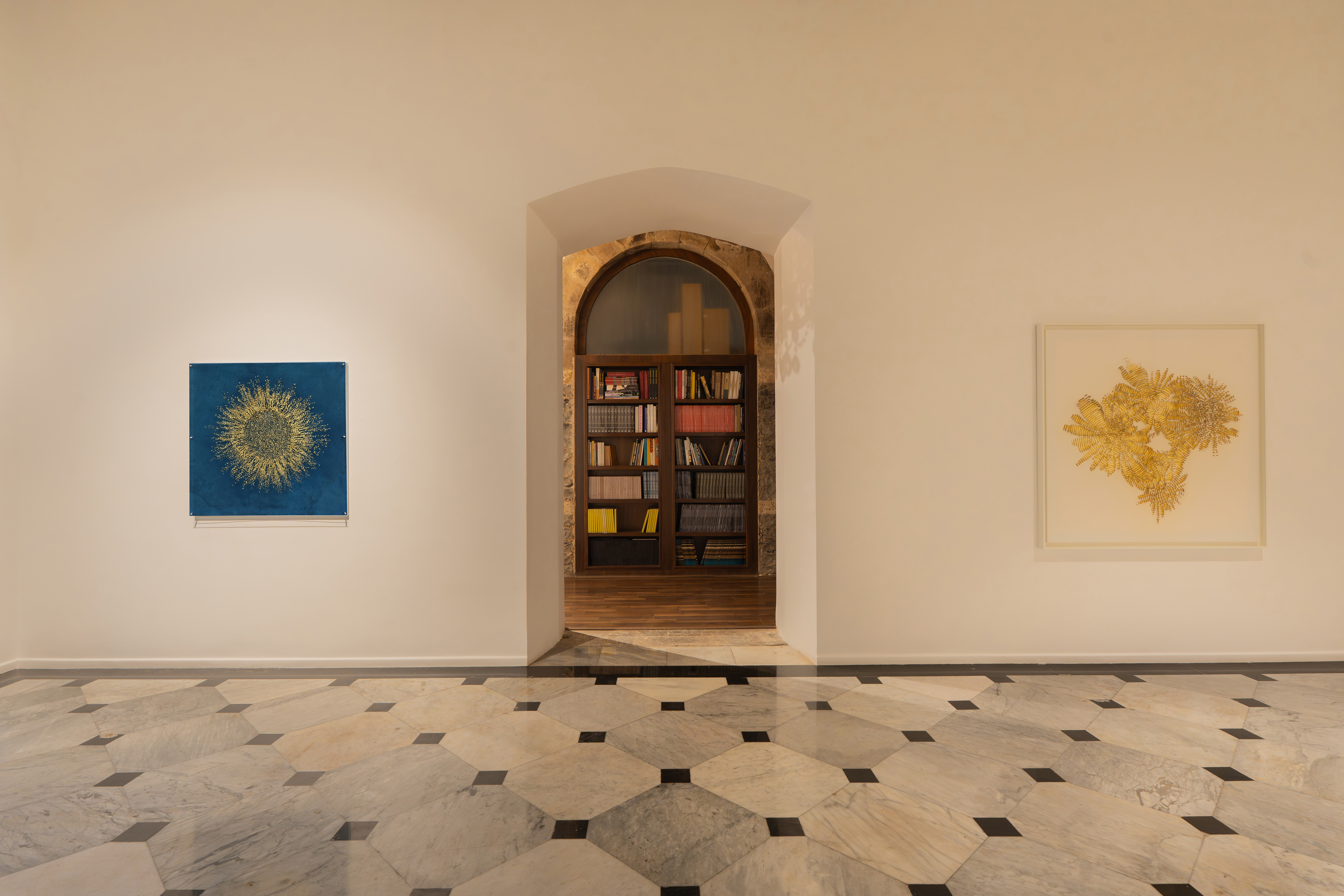
If the cyclone shows nature’s fury on a monumental scale, cymatics revels in the quieter patterns of oscillating energy. Coined in the 1960s by a Swiss physician, its origins are found in the Greek word ‘kyma’ meaning wave. The cymatic works draw on photographs by sound engineer and photographer Jacob Lee Adlington, recording the intricate patterns that emerge when water is vibrated at particular frequencies. Pugh translates these formations into layered burnt paper, gold and gilded relief drawings on glass, exploring how light moves through and across different materials.
While these works draw on the elemental forces of water and stone, fire and its ability to transform is also at the foundation of Pugh’s practice. Pugh’s technique involves burning, creating an absence of material, a void, that allows light, pattern and movement to pass through. Working with burnt and layered Japanese paper, gold, glass and stone, Pugh continues delving into how stillness can be dynamic. This is particularly apparent in ‘Cymatic’, the paper and gold cymatic work. Pugh translates the pattern created by vibrations into apertures burnt onto treated Kozuke paper; a 22- gold leaf gilded backing panel reflecting a constantly changing light. The resulting play of shadow and light, of brightness and depth, unfolds and offers a newly charged way of seeing on different viewings.
This tension, of giving a material form to something so fleeting (a vibration, a sliver of light, a momentary reflection) is what compels Pugh. “I’ve become interested in the Chinese concept of Li, which describes the patterns we see emerging in nature. What draws me to it is the idea that these patterns aren’t fixed, but are continually unfolding—the circulation of a storm, the branching of a living network, or the shifting play of light on water. I like to think of it as nature’s handwriting.”
It’s telling that Pugh cites artist Leonardo Da Vinci and Zen Buddhism as influences. Seemingly disparate, they bring scientific inquiry, artistic techniques, spiritual complexity, a relationship between humans and the natural world, and the power of the collective experience into contact.
Across the exhibition, variations in nature’s energy, vibrating water and branching networks reveal different ways in which form emerges through change. Pugh gives these ephemeral processes a material presence, while light moving across gold, through apertures and between layers keeps the works responsive to their surroundings. Just like the branching structure of nature, these inspirations draw from varied sources, but share a common root, and flow towards a singular question—how does a still artwork evoke a world continually coming into being?
-Priyanka R. Khanna